Finnish Blueberry Yogurt Pie – Entry 20

Last week we baked a blueberry pie. Thats a typical pie of Finnland. It was delicious. Here the finnish recipe to it.

Pie Shell

  • 3/4 cup butter
  • 3/4 cup sugar
  • 2 eggs
  • 1 cup unbleached white flour
  • 1/2 teaspoon. baking powder

Kitchen Utensils

  • electric mixer
  • bowl
  • 9 or 10-inch pie pan
  • wooden spoon
  • measuring cup

1) Preheat the oven to 350F/ 180°.
2) Butter and flour a 9 or 10-inch/25 cm pie pan.
3) Beat 3/4 cup sugar and soften butter until the mixture is smooth and creamy with an electric mixer.  Add the egg and blend well. 
4) Mix into the wet ingredients the baking powder. You might want to switch from the electric mixer to a wooden spoon or use your hands to mix the dough. Stir in flour, 1/2 cup at a time and to form a soft dough. The dough will be sticky, like sugar cookie dough.
5) Butter pie pan. Dust the pie pan generously with flour. 
6) With flour-dusted fingers pat the sticky dough into the bottom of the prepared baking dish.  Push the dough up to cover the sides of the pan and create a raised edge of dough around the dish.
7) Put the pie pan in the refrigerator to cool down while making the blueberry filling.

FILLING

  • 2 eggs
  • 3 tablespoons of sugar
  • 1 cup of plain yogurt (vanilla yogurt optional)
  • 1 freshly squeezed lemon
  • 1 teaspoon pure vanilla extract
  • 2 cups of blueberries, fresh or frozen

Kitchen Utensils

  • whisk
  • bowl
  • measuring cup
  • spoon

1) Mix the eggs, sugar, yogurt, lemon juice and vanilla extract with a wooden spoon in a large bowl until smoothen

Assembly 
1) Remove cold pie pan from the refrigerator
2) Place the 2 cups of blueberries into the cold pie shell.  
3) Gently pour in the filling so the berries are coated and evenly distributed. If need be gently tip the baking dish to spread the filling around  to fill in the gaps.
4) Bake in the preheated 350 degrees F oven.  Bake the pie for 50 to 60 minutes, until the crust is browned and the custard has set. 
5) Chill well.

The blueberry pie can be served warm or cold.  Also the pie can be served plain or with whipped cream or vanilla ice cream.  A nice cup of coffee goes well with this too.
The pie will hold well in the refrigerator for a couple of days. 
Also the recipe is versatile to add other types of berries such as raspberries or too.

Enjoy!

My experiences now with the public transport – Entry 19

Bildergebnis für föli bus winter

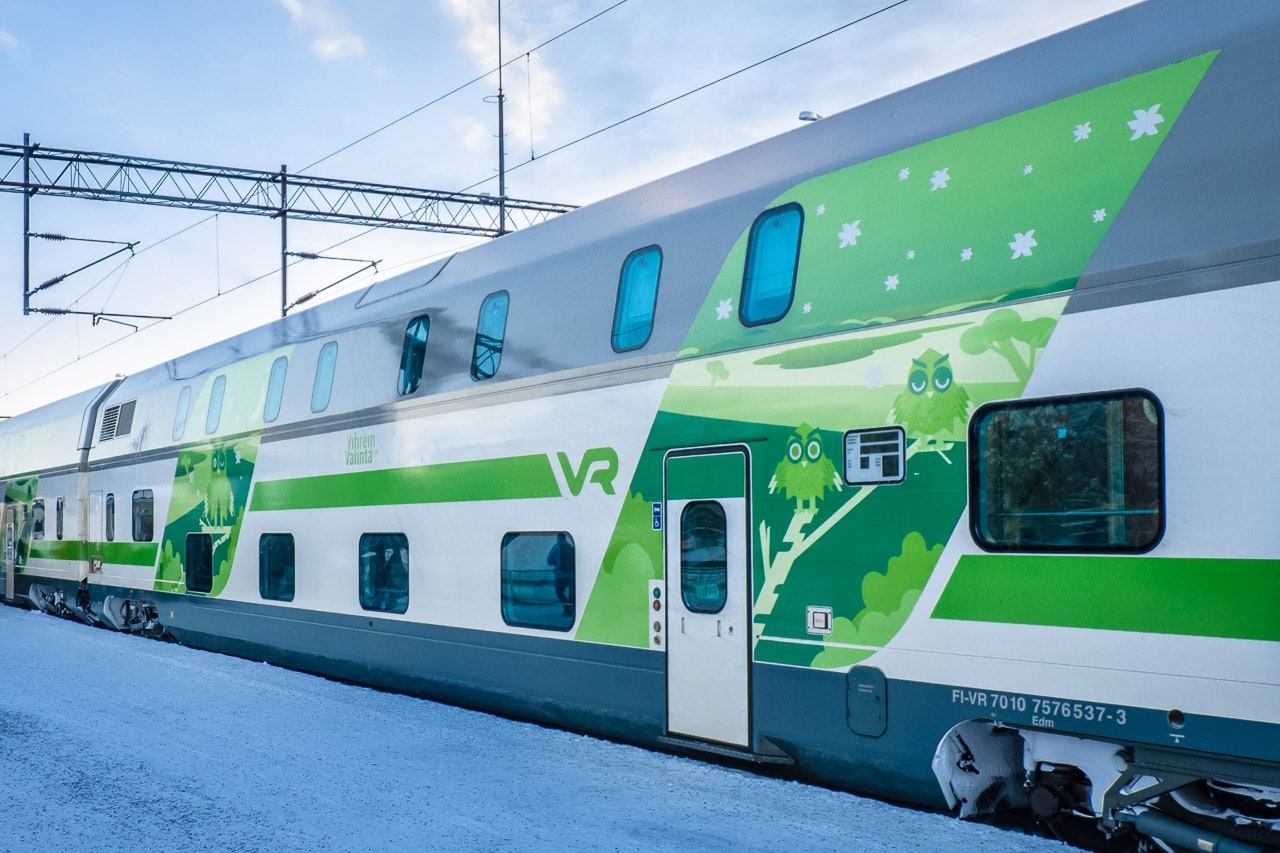
Slowly I learned how to use the public transport here. The train is really nice here I know now how to use it. It is mostly on time but I think in winter it might be somtimes late.

The bussystem is also good but for not local people it is sometimes a bit hard to know how it works but now I got to know how it works. I’m fine and I know now how to use it. I don’t think the busapp is really usefull but google maps works really good here to find your way with the bus.

I really like the system with the bus cards here. In Switzerland you can jump on the bus at every door and you don’t nessesary need a bus card. Somtimes there are people contolling but it is not that often. I really like the system here so you can be sure everyone has a ticket. Also the cards are good they are like batches you just have to tap the machine and it will check your card.

First experiences with public transport in Finnland- Entry 18

Bildergebnis für zug helsinki

Public transport in Finnland

When I arrived in Finnland, I flew in to Helsinki. From there I had to take the Train to Helsinki Center. That took about a half an hour. The next step was to take the Train to Turku trainstation where my student tutor was waiting for me.

When I arrived at the airport I was looking for the trainstation I thought I will be really close to the central station but that wasn’t exactly true. I was taking the train and luckily there were some people that were speaking in English because I wasn’t to sure how long the train ride will be. I found it is half an hour. When I jumed off it was really cold and windy.

When I arrived at the trainstation I was looking for a ticket at the ticket machine but it was a bit complicated so I went to the ticket office and did get one there. Sadly I just missed the last train that was leaving before with a delay. So I knew I had to wait at least 20 minutes. But it was delayed because of the blizzard so I had to wait 80 minutes in the cold.

That were the first few experiences with the public transport in Finnland.

Husky safari – Entry 17

I was on a trip to Lapland and there we were doing huskysledging. It was really interessting to see how it works. I have seen some movies about it but it was not how I expected it to be. It was really cold we were really freezing. It was -32 C°. I couldnt enjoy it that much I was really happy when it was over and I could go inside to the fireplace to heat up myself.

History of Sleddogs (Greenland dogs)

On the island of Greenland where so-called Greenland dogs developed as their own breed over time. Inuits valued strong, durable and well-coated dogs. The dogs would help them journey across sea ice and hunt polar bear using a sled built from driftwood and leather straps. The dogs were traditionally roped up as a ‘fan’ team – 10-14 dogs tied individually back to a central line leading to the sleigh or to the sleigh itself and proceeding forward without a clear leader. These dogs are extremely tough in both body and mind; they can withstand hunger and cold well and can be a little hard to train. They are often left to almost fend for themselves on isolated islands over the summer months and hence the breed is one in which genetic selection has often been through survival of the fittest. Dog to dog aggression is, therefore, more common within Greenland dogs than it is in other husky lines where the line has been controlled more by human selection.

Finnland Bucketlist – Entry 16

I did a Finnland bucketlist for me. I put all the things I wanted to do on that. I alredy did a lot of these things since I’m here at my exchange but there are still some more to go.

Bildergebnis für kuksa

What I have already done

  • Try to catch a snowflake with my tongue
  • Go to an ice-hockey match
  • Grill a sausage on a campfire
  • Drink tea out of a kuksa
  • Drive a car and pass a walking reindeer
  • Eat fazer chocolate
  • Eat salmon soup
  • Go ice-swimming
  • Hunt the aurora borealis
  • Walk on a frozen lake
  • Eat blueberry pie
  • Try finnish beer
  • Eat reindeer
Ähnliches Foto

The things that I want to do

  • Sing karaoke
  • Make a snow angel
  • Row a boat
  • Kill a mosquito (or a couple)

Snow – Entry 15

It’s unbeliveble I heard Finns have more than 40 different words for „snow“ – at least if you stretch the definition a bit to include all forms of frozen precipitation.

Frozen precipitation that is still falling

  1. lumi: snow
  2. pyry: snow shower
  3. myräkkä: snowstorm
  4. rae: hail
  5. räntä: sleet
  6. tuisku: snow shower with strong wind
  7. laviini: a small avalanche

Frozen precipitation mixed with water

  1. hyhmä: snow floating atop water
  2. loska: very wet snow; snow, water and mud mixed together
  3. sohjo: slushh; snow and water mixed together

Frozen precipitation atop large bodies of water

  1. ahto: pack-icee (broken & refrozen ice)
  2. ahtauma: a formation of pack-ice
  3. jää: ice
  4. kide: ice crystal
  5. kohva: gray ice formed from wet snow
  6. paanne: multi-layered ice (typically waves crash on top and freeze)
  7. railo: pressure ridge in ice
  8. röpelö: uneven ice
  9. tökkö: ice with frost on top

Frozen precipitation on the ground

  1. iljanne: a thin layer of snow atop ice
  2. hanki: a even layer of snow on the ground, esp. if enough for skiing
  3. huurre: rimee; granular frost (the white stuff in your freezer)
  4. härmä: frost
  5. kinos: snow drift; a loose pile of snow, esp. one formed by wind
  6. kaljama: a thick layer of ice on the ground, lethal in the spring
  7. kuura: hoarfrost; frozen dew
  8. nietos: a large, hard pile of snow (may be refrozen)
  9. nuoska: „snowballable“ snow, usually formed when powdery snow melts a bit
  10. polanne: a hard layer of compacted snow
  11. tykky: large chunks of snow, esp. when frozen onto trees
  12. viti: freshly fallen powdery snow

Frozen precipitation after human or animal intervention

  1. avanto: a hole in ice
  2. jotos: reindeerr tracks in snow
  3. latu: a ski trail in snow
  4. rannio: a reindeer path in deep snow

Onomatopoetic verbs for walking on snow

  1. nirskua
  2. narskua
  3. kirskua
  4. nitistä
  5. narista

Dialect words

Some of the above are pretty obscure, but these are downright bizarre. Finns who do not speak the dialect in question (marked in parentheses if known) will not understand these. And note that this is only a small sampling, linguists have recorded literally hundreds of these.

  1. hölse: slush
  2. höty: loose snow
  3. höttyrä: loose snow
  4. höyty: loose snow
  5. judake: reindeer track in snow (Lapland)
  6. klossakko: slush
  7. komo: raised ice
  8. kieppi: snow pile
  9. mora: uncompacted, unskiable snow (Lapland)
  10. triimu: snow pile (West)
  11. triivu: snow pile (West)
  12. purku: snow shower (East)
  13. pöykky: snow pile (Tampere)

Borderline cases

Depending on context, these may or may not refer to snow.

  1. keli: weather conditions; the „skiability“ of snow
  2. pulveri: powder; very cold, fine, powdery snow
  3. valli: wall, blockage; a wall of snow (natural or manmade)

It’s amazing to see that they have so many words for it. That shows how importatnt snow is for their lives.

Finnish nightmares – Entry 14

There are a lot of Finnish Nightmares and it is really interesting to see their point of view at least whats right for the most of them. Some attitudes are simmilar in Switzerland as in Finnland but some are completly different. I will talk below about some of them.

Smalltalk

Bildergebnis für finnish nightmares


It was really interesting to see that they don’t like „small“talk. Or they doing it even smaller. I think it should be normal that you have to do a little bit of smalltalk at least. Because if you meet a new person how can speek with them in the beginning if you are not really able to do smalltalk?

Speaking with strangers

Bildergebnis für finnish nightmares

That’s simmilar to me. I don’t like when strangers start to speak with me. It desen’t matter in the bus or somwhere else in the public. If they are more older people I like to do it because I think they are somtimes lonley. I think it is nice to have somone to talk with and have somone who is listening.

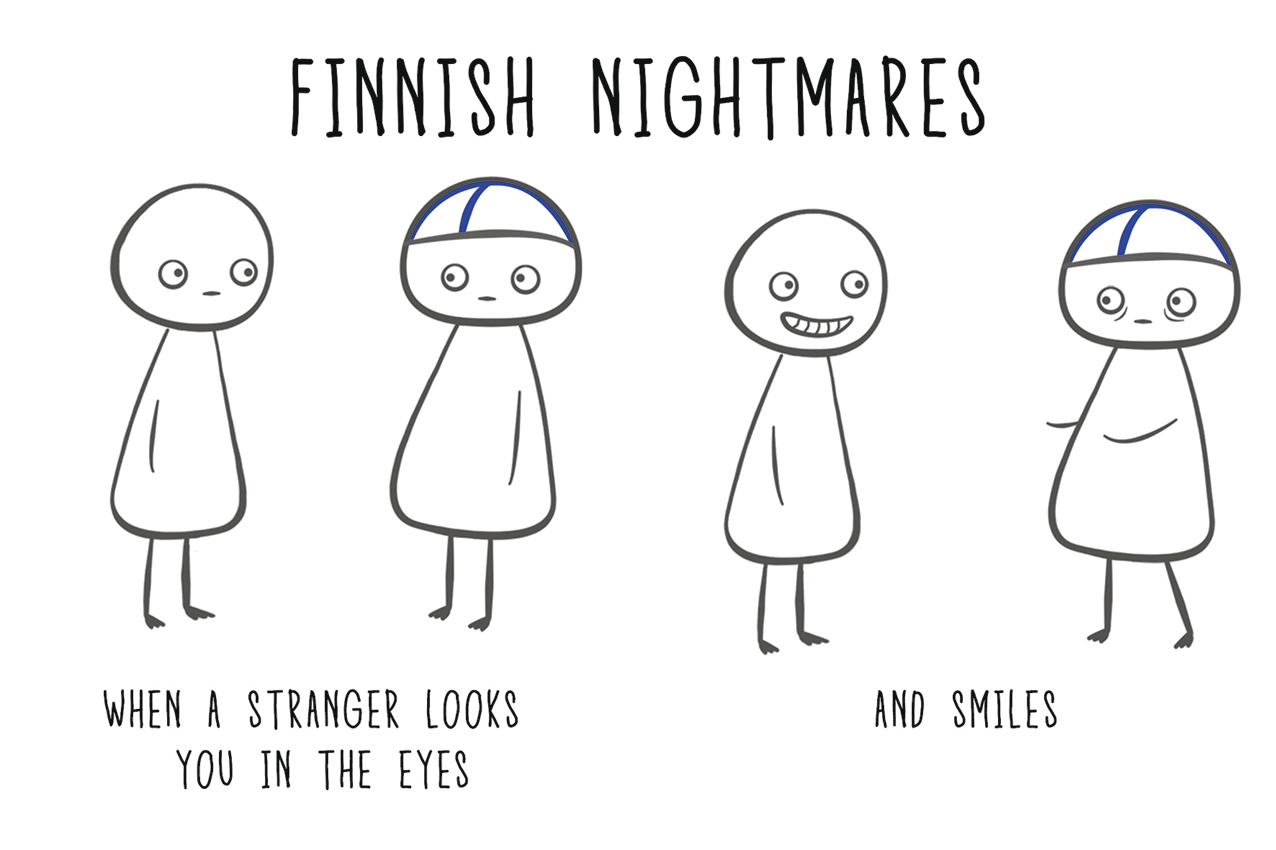
Looking in to eyes

Bildergebnis für finnish nightmares

For me it is normal to look in to others eyes. If I’m speeking with someone also I try to look in their eyes. And also to smile to somone else. In my country you just want to be friendly and make the other happy when you smile at them.

These are just some examples how diffrent countries can be and Switzerland is not that different to Finnland on my oppinion.

Languages in Switzerland – Entry 13

Most countries have one or two official national languages, like Finland, while a few including the United States and Mexico have none.

By contrast, Mexico has no official language. Despite Spanish being the language of government and spoken by the majority of the population, it has not been given official status as there are also many indigenous languages.

Similarly, the United States does not have an official language. English is the de facto language of government and business, but many other languages are also commonly spoken, including Spanish, Chinese and French.

Switzerland has four national languages they are German, French, Italian and Romansh. All but Romansh maintain equal status as official languages at the national level within the Federal Administration of the Swiss Confederation. In some situations, Latin is used, particularly as a single language to denote the country.

In 2017, the population of Switzerland was 62.6% native speakers of German (58.5% speak Swiss German and/or 11.1% Standard German at home); 22.9% French (mostly Swiss French, but including some Arpitan dialects); 8.2% Italian (mostly Swiss Italian, but including Lombard dialects); and 0.5% Romansh. The German region (Deutschschweiz) is roughly in the east, north and center; the French part (la Romandie) in the west and the Italian area (Svizzera italiana) in the south. There remains a small Romansh-speaking native population in Graubünden in the east. The cantons of Fribourg, Bern and Valais are officially bilingual; the canton of Graubünden is officially trilingual.

Myths about Northern Lights – Entry 12

Mythical fire foxes

In Finland, the name for the Northern Lights is revontulet, literally translated as ‘fire fox’. The name comes from the rather beautiful myth that Arctic foxes produced the Aurora. These fire foxes would run through the sky so fast that when their large, furry tails brushed against the mountains, they created sparks that lit up the sky. A similar version of this story tells that as the fire foxes ran, their tails swept snowflakes up into the sky, which caught the moonlight and created the Northern Lights. This version would have also helped explain to the people why the lights were only visible in winter, as there is no snowfall in the summer months.

Heroes lighting up the sky

Odin was the chief god and ruler of Asgard, revered by all Vikings. They believed he lived in Valhalla, where he was preparing for Ragnarök – a series of events that would precipitate the end of the gods and begin the world anew. In Viking legend, Ragnarök was predestined and would be Odin’s greatest battle, so he needed the bravest warriors at his side.

During every battle on Earth, Odin would pick the warriors who would die and join him in Valhalla. The Valkyries – female warriors on horseback, who wore armour and carried spears and shields – were tasked with leading Odin’s chosen warriors to Valhalla. The Vikings believed the Northern Lights illuminating the sky were the reflections of the Valkyries’ armour as they led the warriors to Odin.

Dying in battle was considered an honour for our Norse ancestors and many of their legends feature great battles which celebrate warriors who died fighting.

In some legends, they claim the Aurora was the breath of brave soldiers who died in combat. In other stories, the Aurora was believed to be the ‘Bifrost Bridge’, a glowing, pulsing arch which led fallen warriors to their final resting place in Valhalla.

Names – Entry 11

I already wrote about simmilarities in the languages and there are not that much between German and Finnish. But what I noticed was we have a lot of simmilar Names. I looked at the most popular 100 names and I knew more than a third of the boys names and more than a half of the girls names. Here just some examples from friends and relatives in my life.

Names for Boys

Finnish German
Samuel Samuel
Severi Severin
Mauri Maurin/ Maurus
Tuomas Thomas
Verner Werner

Names for Girls

Finnish German
Alina Alina
Alexandra Alexandra
Linda Linda
Ronja Ronja
Krista Christa
Heidi Heidi
Jasmin Jasmin/ Jasmine
Anna Anna